

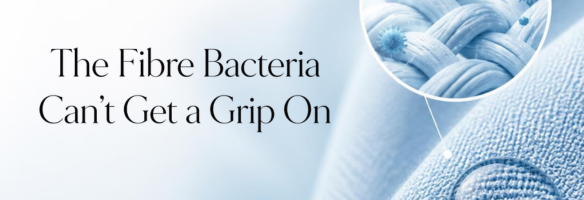
Your sheets are covered in bacteria right now. That's not an insult to your cleaning habits it's just biology. Every surface that touches skin picks up bacteria constantly. The real question isn't whether bacteria are there, it's whether the conditions exist for them to actually multiply. And that comes down to one thing more than anything else: moisture.
What bacteria actually need to survive
Bacteria aren't picky about surfaces they're picky about conditions. To multiply, most bacteria need three things: a food source (skin cells, oils, and sweat residue provide plenty), warmth (your bed is basically an incubator at body temperature), and moisture. Take away any one of those and bacterial growth slows dramatically. You can't remove warmth from a bed, and you can't stop your body from shedding skin cells overnight but moisture is the one variable a fabric can actually control.
This is where the difference between materials becomes less about comfort and more about biology. A fabric that holds onto moisture creates a damp film on its surface for hours at a time. That thin layer of trapped moisture is exactly the environment bacteria need to establish themselves and start forming what's called a biofilm a colony that clings to a surface and becomes progressively harder to fully clean out, even with regular washing. A fabric that moves moisture away quickly never lets that film form in the first place, which means bacteria never get the window they need to settle in.
Why Lyocell behaves differently at a structural level
Lyocell a fibre made from wood pulp, often eucalyptus gets attention for feeling like silk, but the real advantage is structural, not textural. Its fibres are naturally smooth and fibrillar, pulling moisture into the fibre itself rather than letting it sit on the surface, then releasing it back into the air quickly which is why Lyocell stays dry to the touch on a humid night while cotton, which holds moisture closer to the surface for longer, can feel noticeably damp. That fast moisture cycling is also why moisture-wicking fabrics are so often recommended for eczema, dermatitis, or sensitive skin less surface moisture means less room for both bacteria and dust mites to thrive, with no added chemical treatment needed.

What this isn't
It's worth being precise here, because this is where marketing tends to oversell things: Lyocell is not antibacterial in the way a hospital-grade disinfectant is. It doesn't kill bacteria on contact. What it does is remove the environmental conditions bacteria depend on to multiply which is a structural property of the fibre, not a chemical coating. That's actually the more durable kind of protection, since it doesn't wash out or wear off the way an added antibacterial treatment eventually would. But it also means the fabric works by prevention, not elimination bacteria that are already present don't get destroyed, they just don't get the conditions to grow into a real colony.
What to actually look for
If hygiene is the priority, thread count and softness aren't the numbers to focus on — moisture absorption and release rate are. Fibres like Lyocell, Tencel, and some bamboo-derived fabrics are built around this exact property, and it's a genuinely more useful thing to ask about than "how soft does this feel" when you're comparing sheet sets, especially if you run warm at night or deal with sensitive skin.
The Real Takeaway
Bacteria don't care about softness or thread count they care about moisture, and that's the variable a fabric can actually influence. A material like Lyocell isn't valuable because it mimics silk; it's valuable because its fibre structure interrupts the one condition bacteria need most to take hold. The better question when shopping for sheets isn't how they feel against your skin tonight it's what they're doing with moisture while you sleep. change the heading to more interesting


