

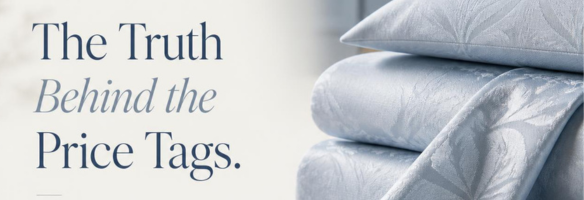
Two sheet sets. Same colour, same "100% cotton" label, same soft, inviting look in the photo. One costs $49. The other costs $249.
So is the pricier one really five times better, or is "premium" just doing a lot of heavy lifting on that price tag? The answer isn't a simple yes or no. It comes down to a handful of decisions made long before either sheet ever reached a shelf. Let's get into what those decisions actually are.
It Starts With The Fibre, Not The Fabric
Every bedsheet begins as a raw material decision, and this is where most of the price gap is quietly decided before a single thread is woven. Cotton is not one thing: short-staple cotton is cheap, widely available, and prone to pilling over time, while long-staple and extra-long-staple cotton (the kind behind names like Egyptian or Pima cotton) has longer fibres that spin into finer, stronger, smoother yarn fewer loose ends poking out of the fabric, which is the actual physical reason expensive sheets feel smoother and pill less, not marketing spin.
The same logic applies to blends versus pure fibre, and to labour-intensive materials like bamboo, linen, or synthetic-natural mixes. Bamboo, for instance, is prized for breathability and softness, but turning bamboo pulp into wearable, drapeable fibre is a far more involved process than most people assume which is part of why a collection like Intero's Toni 7.0 Jacquard BambooPro™ sits where it does on the price scale. This is the first fork in the road: cheap fibre in bulk vs. selectively sourced, longer-fibre material, and that decision alone can double or triple raw material cost before anything else even happens.

Design Standards, Tiers, and The Real Math
"European design standards" sounds like a script line, but there's substance behind it stricter quality benchmarks, tighter weave tolerances, and more rigorous testing for color, fastness and shape retention after washing. Meeting those standards costs money, and that cost lands somewhere in the price. Strip away the language and bedding pricing really comes down to three things: how good the raw fibre is, how complex the production process is, and how rigorously the final product gets tested.
A $49 set isn't a scam it's just short-staple fibre and minimal finishing, fine for someone who replaces sheets often. A $249 set, if it's priced honestly, is paying for better fibre, a harder weave, and stricter quality control that shows up as still looking good after 100+ washes instead of 20. The real question isn't whether tiers exist it's whether a specific product actually delivers on the tier it's charging for.
And that's where the real math comes in: a $249 set that lasts 5–7 years works out to roughly $0.10–$0.15 a night, while a $49 set that degrades within a year and gets replaced twice over the same period can end up costing more overall while you sleep on something that's quietly getting worse. That's not to say expensive always wins; cheap sheets have their place. It's just a reason to judge price against lifespan and honesty, not the number on the tag alone.
The Bottom Line
Bedsheet pricing isn't a guessing game, but it also isn't self-explanatory from a price tag alone. It's the sum of fibre choice, weave complexity, and the standards a product is actually held to during production. Knowing what those three levers are means the next time you're standing between two sheet sets, you're not choosing based on which one sounds more premium you're able to actually tell what you're paying for.


