

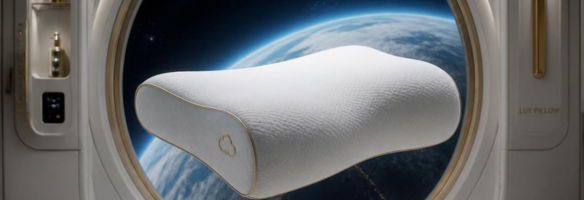
Did you know that the thing you're sleeping on tonight was originally built to survive rocket launches? Yeah read that again.
.Today's subject: memory foam. Specifically, the kind you sink your face into every night without a second thought.
Wait, NASA Made My Pillow?
Kind of. Press your hand into a memory foam pillow and watch it slowly, satisfyingly spring back into shape that's not just a "cool foam trick." That reaction is literally rocket science.
Here's the moment: memory foam wasn't designed with sleep in mind at all. It was created by NASA.
Okay, But Actually How?
Back in 1966, NASA scientists were dealing with a very different kind of comfort problem: how do you protect astronauts' bodies from the extreme, crushing G-forces of a rocket launch? Regular padding wasn't cutting it. They needed a material that could absorb violent impact and distribute pressure evenly across the body something that could take a beating and bounce back.
So they engineered a new kind of foam. One that reacts to body heat and pressure, softening and molding around whatever's pressing into it, then slowly returning to its original shape once the pressure's gone.
It worked. It got astronauts through launch. And then, decades later, it made its way into bedrooms everywhere.
From Launchpad to Your Headboard
That same heat-reactive, pressure-absorbing tech is exactly what's happening every time you lie down on memory foam. It contours smoothly around your head and neck, custom-molding to your exact shape and erasing the pressure points that leave you tossing and turning.
That's the tech Intero brings straight into your bedroom— space-age engineering, minus the G-forces.
Rocket science. Ultimate comfort. You're basically sleeping on aerospace tech every single night.


